I'm skeptical that the left knows what to do, I'm very skeptical of what the left advances in terms of policy proposals, but in terms of my values, they haven't changed at all. I'm still as far left as I was before. The left told us "You're not welcome anymore." In fact, you're not even left—you're right, or, you know, if it's really pissed at you, you're alt-right, or you're a darling of the alt-right. So it's not surprising that, A) people in the Intellectual Dark Web would be prone to being de-platformed, and B) that we would be particularly sensitive to the danger of ruling certain opinions beyond the pale.
The 2020 Harper’s magazine “Letter on Justice and Open Debate,” which drew some of the same ‘white people protecting their privilege’ objections as the IDW, unquestionably had a far greater impact. What do you do when you define yourself as a rebel and an outsider but the “dissident” ideas you’ve championed have gained “insider” respectability? (He warns, however, that “if Trump gets re-elected, this will change.”) And indeed, many of the issues IDW members were championing six years ago—such as freedom of speech and the overreach of progressive “cancel culture,” or the need to address the struggles of many boys and men in a world of changing gender roles—are now the subject of flourishing mainstream discussion. Lehmann sees “real progress in the media ecosystem opening up,” though she believes heterodox advocacy is still necessary in academia. Both Lehmann and Harris believe that recent cultural trends make a community of heterodox intellectual unnecessary.
For Nearly A Century, Republicans Have Been Pretending To Be The ‘real Liberals’
Harris demurred, saying most of the people he’s now embarrassed by are IDW-adjacent figures he says he’s never met (or maybe met once). Szeps pushed back, expressing disappointment that Harris wasn’t as self-reflective as he could have been in assessing his own endorsements of certain people who turned out to be (essentially) nuts or frauds. Fear of offending his right-wing viewer base, Harris said, was why the ostensibly “liberal” Rubin would never criticize Trump for anything, at all. And this is all about a comprehensive effort to get people to bend the knee to increasingly stringent misuses of state power.” “When you see information being politicized… and truly reputable people are being silenced or ignored or shadow-banned on Twitter, it’s catnip for anyone who wants to connect all of the dots in a way that seems sinister,” Harris said. Harris referred to a number of IDWers as “erstwhile smart people” who now say that “the most qualified experts on many questions—whether you’re talking about what wars to fight or what medicines to give your kids—have been captured by sinister influences of power, or such comprehensively bad incentives, that basically everyone you should have been able to trust yesterday is now wrong about very important topics.
I got into private arguments defending the notion of this “club” as simply being a “mode of thinking” rather than some specific network of people. It was something that you might find scribbled in the borders of a notebook of the geeky boy who read a few too many Batman comics. I’m genuinely bummed to see it crumble into a political team sport and economically driven cringefest of provocative-but-vapid takes.
What Happened To The Intellectual Dark Web?
And I, like many people, was fascinated by this development. They acted as if they could solve political problems through interminable podcast debates and failed to offer a viable theory of change. But I don't mean to cast him in a negative light, I was actually trying to say that he's…I think the messianic stuff is ultimately the most troubling, and it's actually when he rises up and does his cobra strikes that sometimes it's funny and witty and good and on point, but for me, it's ultimately the least interesting. Which doesn't mean he's right about everything, but it does mean that he's not going to be persuaded by Patreon followers or people applauding to think things about psychology that he doesn't actually believe. So, the intellectual is an honest broker.
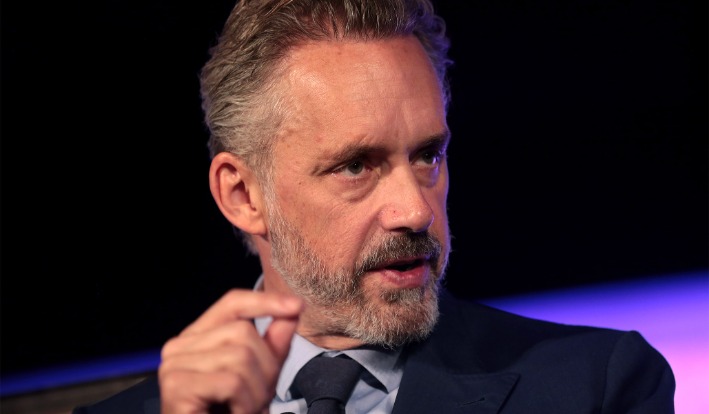
What Is The Intellectual Dark Web?
He is known for coining the term "Intellectual Dark Web" and is currently involved in intellectual discussions, podcasts, and exploring topics related to physics, economics, and societal issues. IDW beliefs overlap with those of the alt-right movement while tending to avoid explicit white supremacy and ethnonationalism. Discover more of the author’s books, see similar authors, read book recommendations and more. Additional interests include exploring the political insights we can gain from literature. More broadly, he is a ‘first principles’ political philosopher who is interested in the relationship between the individual and the group, the nature of progress, and the creation of knowledge.
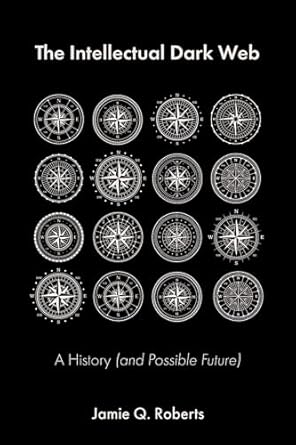
The Saga Of The Intellectual Dark Web And Its Canceled Book, Now Republished
While the group had once been united against what Harris calls “the woke mind virus”—which he says has infected institutions like science, academia, and journalism—Harris now says he’s confounded by certain behavior among that squad, such as fellow IDWer Bret Weinstein doing “a hundred episodes of his podcast in a row on the terrors of mRNA vaccines—and the sinister, shadowy cabal of people who have suppressed information about the life-saving power of ivermectin. The Intellectual Dark Web is a nickname for a group of people on the Internet. His journalistic writings have appeared in numerous publications in both English and French; and he has translated the authors Michel Foucault and Marcel Gauchet. In the 1990s, left and progressive thinkers including Richard Rorty, Cornel West, and Edward Said made clear their reservations about certain activist tactics, and articulated positions in line with the same universalist values neoconservatives claimed as their own. If political correctness is the threat to society they claim it is, for example, what exactly has it accomplished since neoconservatives began pointing it out in the late 1980s?
How Many Episodes Does The Intellectual Dark Web Podcast Have?
What these individuals have in common is that, in the pursuit of truth and free expression, they offended arbiters of politically correct opinion. The researchers defined all three as “contrarian” communities, or groups formed in opposition to the perceived wave of political correctness on the left. Weinstein, and the imaginative wing of the IDW, continue to deride postmodern, social justice activism in higher education, despite proclaiming that religion may have evolutionary benefits for humanity. For the past decade, this small, yet influential faction of self-styled iconoclasts have vehemently opposed political correctness, social justice theory, and postmodernism in academia and professional settings. Such is the case of the privileged contrarians, the exiled academics who have sloppily formed the vestiges of an “Intellectual Dark Web;” a neoliberal enclave of “public intellectuals” determined to reduce the progress of pedagogy to the sterile hierarchy of pedanticism.
Similar Content Being Viewed By Others
But only one cheer, because he’s still letting some mortifying IDWers off the hook for behavior he’s decried in others, and he hasn’t yet truly reflected on why he was so taken in by dim careerists and a movement built more on emotional opposition to wokeness than a noble pursuit of truth and vigorous debate. In short, Rubin’s origin story as a “public intellectual” is inextricably linked to Harris. Rubin has frequently said that his political “awakening” (or why he “left the left”) was inspired by watching Harris and Ben Affleck argue about Islam on an episode of Real Time with Bill Maher. In particular, Szeps expressed frustration with what he describes as the groupthink among mainstream outlets on certain topics of which reasonable disagreement should be able to take place—such as allowing psychiatrists some latitude on how to treat children with gender dysphoria without labeling them transphobic, or whether certain vaccines make sense for every person. Critics of the Intellectual Dark Web say it just supports right-wing politics and think it encourages extremism about right-wing politics. Jacob covers American politics for the satirical weekly Charlie Hebdo, with which he recently co-created a special report on the left under Trump entitled Feeling the Burn.
I mean that a podcast, even a brilliant argument sustained over a number of years about the evils of critical race theory, for example, will not change the K-12 curriculum in a public school system. The first is that these are ultimately political problems. And so, what happens is that over this period of four or five years, events surpassed the IDW and it turned the IDW into a spent political force, as the world moved beyond critique and accepted the critique. We oppose coercive DEI bureaucracies, but we are unwilling to go along with Republican politicians who want to do something about it, who want to use democratic power to restrict critical race theory, to restrict DEI bureaucracies and K-12 schools and public universities. They thought that he was an incarnation of evil, anti-intellectualism, and corruption—and he had a really distasteful skin coloration. There are three key decision points that started this splintering of the group, which revealed that it wasn’t an intellectually coherent group, but actually an alliance of convenience against an orthodoxy, but not an alliance capable of creating a replacement or a substitution for that orthodoxy.
- The “intellectual dark web” first came about as a joke told by investor Eric Weinstein.
- Two weeks after being released, however, it was suspended from sales following a complaint (or complaints).
- It’s frustrating (and sometimes even embarrassing) when your judgment fails you in assessing a person, be it in a personal or professional relationship.
- What is apparently so novel about the “intellectual dark web” is not just its savvy use of Patreon or YouTube, but its claim to be eclectic and transpartisan.
- Secular conservatives have next to no power in the Republican party, but there are quite a few of them in the general population, as surveys from the Pew Research Center have shown over the years.
Snow Tha Product Is Ready To 'Crash Out' But First, A New Album
This vision of two parallel societies may be dispiriting for early fans of Rubin — after all, this was the host who promised to bring together people of all different political stripes. In time, these boundaries may solidify as some thinkers renounce the movement and others join it, as some ideas are rejected and others sanctioned. Supports would point to Rubin’s remarks, noting the mainstream ignores conversations that are politically inconvenient. As for why the IDW can’t get along with mainstream media, that depends on whom you ask. Today, the radio waves have simply been replaced by YouTube, podcasts, and social media, platforms that can reach much larger audiences than the AM signals of yesteryear.
President Trump’s nominee has written about how religious views and judicial views intersect — and sometimes collide. Henry Farrell is a professor of political science and international affairs at George Washington University. They also have resentments to be capitalized on, and a commitment to rationality that can all too easily be transformed into a commitment to rationalizing their less salubrious political desires. Dark web intellectuals too have seen their culture invaded by women and minorities.
“There is no doubt that the IDW has spent more time criticising the left than the right,” he explains. The history of the IDW cannot be divorced from politics. Too much reaction can be just as bad as the Woke left. Postmodernism frames everything as “only powerful people using their putative reasons to shape reality in the way that suits them.
These thinkers ought not to be allowed to pretend that its ideas are, historically speaking, anything other than conservative. Progressives and leftists can and should deal with these claims on their merits and faults, both in moral and empirical terms. And though Christina Hoff Sommers may appear to break with neoconservative opponents of the women’s movement such as Midge Decter and Gertrude Himmelfarb by calling her video blog “The Factual Feminist,” one should not fail to notice that the channel is hosted by the American Enterprise Institute, the think tank where both elder women were once affiliates.
Members Of The Intellectual Dark Web Want To Be At The Center Of Intellectual Debate But The Center Has Shifted
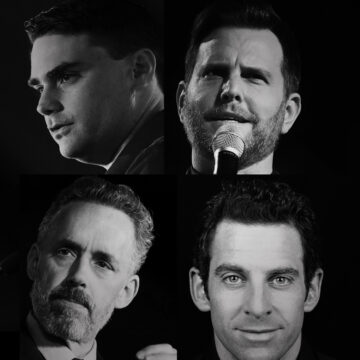
Challenging restrictive intellectual and cultural orthodoxies, this group advocated for free speech and individual liberty. Outside of progressive academics and activists, arguably no group influenced public discourse as much as the Intellectual Dark Web. Science writer Jennifer Ouellette criticized the favorable coverage given to the theory by The Guardian, arguing that experts could not properly evaluate Weinstein's ideas without a published paper. But he hasn’t just flip-flopped politically, he’s also done so about religion as well. Ben Shapiro, an Orthodox Jewish podcaster whose political views are so extreme that he has even appeared on a neo-Nazi podcast, is Peterson’s Daily Wire colleague.
Since the mid-2010s, the Intellectual Dark Web (IDW) has been an unprecedented cultural and intellectual phenomenon. Download the free Kindle app and start reading Kindle books instantly on your smartphone, tablet, or computer – no Kindle device required. This group has become ubiquitous within the modern zeitgeist on platforms such as YouTube and Twitter, on which they can be watched for hours espousing conservative doctrine to their predominantly male, adolescent audience in hopes of maintaining the status quo, and eschewing activism (Weiss & Winter, 2018). This has historically been the result of authoritative governance and infallible religious maxim — along with less acute reasons — and although in modernity, the marketplace of ideas is much broader than it once was, this problem is still quite prevalent today, just for less apparent reasons.