
One of the most commonly reported benefits of PEA is its potential to enhance mood and feelings of well-being. Furthermore, PEA has been studied for its potential benefits in treating certain neurological disorders, such as Parkinson’s disease. Studies have shown that PEA can suppress appetite and increase metabolism, making it a potential aid in weight loss efforts. However, more research is needed to fully understand the effects of PEA supplementation on human health. PEA is often referred to as the “love drug” because it is believed to be responsible for the feelings of euphoria and excitement that people experience when they fall in love. If you’re someone who has been exploring the world of nootropics or supplements, then you may have come across phenylethylamine.
Several substances were synthesized, including a wide range of benzodifuranyl substances, later known as the ‘FLY’. The ‘2C’ series differs from the ‘D’ series only by a slight modification in the chemical structure, and their psychoactive effects have been reported to be dose dependant, ranging from mere stimulant effect at lower doses, with hallucinogenic and entactogenic effects at higher doses. At this time there is not enough scientific information to determine an appropriate range of doses for phenethylamine. The appropriate dose of phenethylamine depends on several factors such as the user's age, health, and several other conditions. Do not take phenethylamine if you are taking tramadol (Ultram). Do not take phenethylamine if you are taking pentazocine (Talwin).
- That is, it enhances the action potential-mediated release of these monoamine neurotransmitters.
- For counselors, drug rehabilitation professionals and concerned family members
- Illegal phenethylamines, such as MDMA, should be avoided by all costs.
- Anecdotal reports on the internet indicate that individuals are using substances they identified as DOI and DOC for their hallucinogenic effects.
- Due to its stimulant effects, phenethylamine is often referred to as the “love drug” because of its mood-enhancing properties.
- However, it’s important to note that the amount of PEA in chocolate is relatively small, and much of it may be metabolized before reaching the brain.
Where stimulus generalization occurs, a dose-response curve can be constructed and an ED50 dose calculated (Figure 4); this process is diagramed in Figure 5. Lower doses of the training drug result in decreased drug-appropriate responding (solid squares) such that an ED50 value can be calculated. Training on drug and non-drug (i.e., typically vehicle) conditions, with (sweetened condensed milk or solid food pellet) re-enforcement, continues daily. Over the years, there have been many attempts to develop animal models of hallucinogenic drug action. So, a second major goal of ours was to identify which agents produced a common effect. His definition was insightful, but quite broad and included agents already (and, certainly, later) recognized as producing different central actions in human subjects (e.g. LSD (2), phencyclidine, and tetrahydrocannabinol – the major active constituent of marihuana).

Figure 12
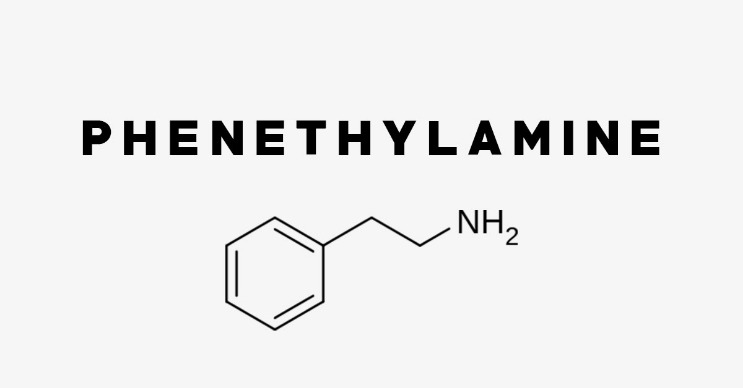
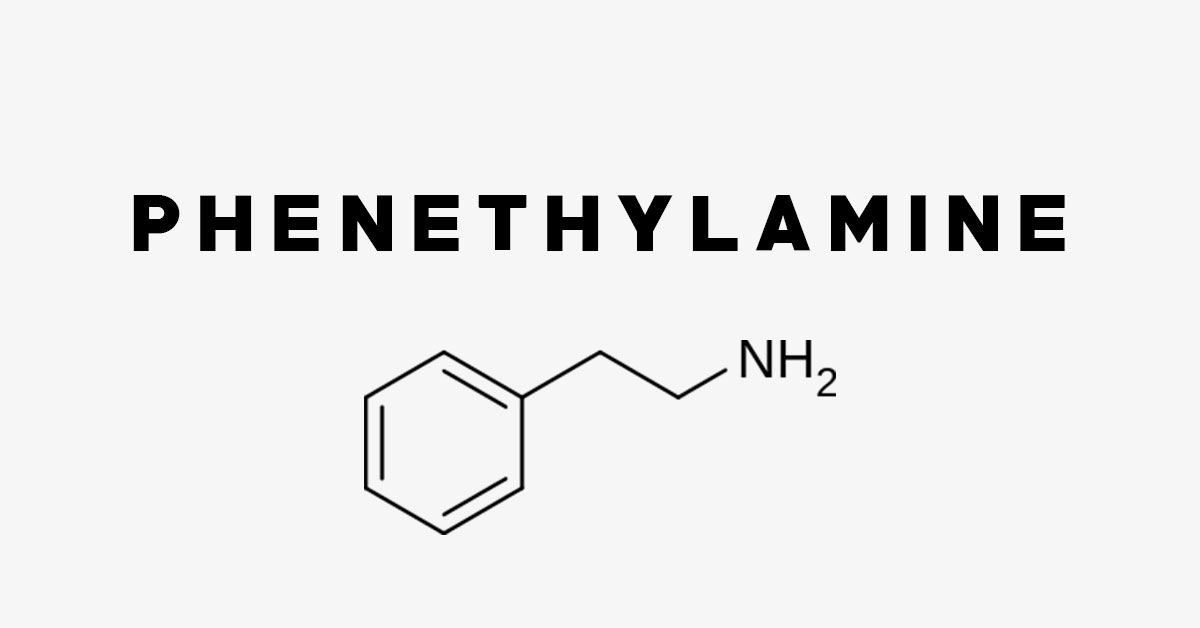
However, many TAAR1 ligands including PEA (1), tryptamine, and 4-hydroxyamphetamine, have minimal central activity when administered by typical systemic routes of administration. We,7 and others,3 showed that certain phenylalkylamines, including PEA (1), amphetamine, and 4-chloroamphetamine displayed low μM affinity for 3Htryptamine-labeled sites in rat brain frontal cortex homogenates. This preparation was selected because several centrally-acting indolealkylamines (i.e., tryptamines) were already known to act at fundus 5-HT receptors as agonists. More than 140 years later, PEA (1) and its analogs remain a continuing and fascinating (and, perhaps, growing) topic of interest for medicinal chemists and, as witnessed by the number of new agents appearing on the illicit market, for clandestine chemists as well. The simplest phenylethylamine, phenylethylamine (1) itself, also known as 2-phenylethylamine, 2-phenylaminoethane, phenethylamine, β-phenylethylamine, or simply PEA. Particularly fascinating was the parent member of this family, phenylethylamine (1), an agent with minimal central action when administered systemically, and the central stimulant amphetamine (8; Figure 3), the simple α-methyl analog of PEA (1), whose orally-active central actions have been known for nearly a century.
15 Peroxisome Proliferator-Activated (PPAR) Receptors
Ring-substituted phenethylamines, commonly known as 2Cs, are designer drugs that are emerging as new drugs of abuse. Thus, excited delirium victims are unable to compensate for rapidly elevating dopamine levels after cocaine use, potentially overstimulating the post-synaptic receptors 30–32. The phenethylamine-based structure is actually shared among amphetamines, catecholamines, cathinones, and many other drugs. Activation of receptors by these agents induces a release of norepinephrine and dopamine neurotransmitters from the synapse.
These data as presented below demonstrate that DOI and DOC have a high potential for abuse. There is a significant diversion of the drug or other substance from legitimate drug channels; or Individuals are taking the drug or other substance in amounts sufficient to create a hazard to their health or to the safety of other individuals or to the community; or In addition to considering the information HHS provided in its scientific and medical evaluation document for DOI and DOC, DEA also considered all other relevant data regarding actual or relative potential for abuse of DOI and DOC. On September 28, 2020, HHS provided to DEA a scientific and medical evaluation entitled “Basis for the Recommendation to Control 2,5-dimethoxy-4-iodoamphetamine (DOI) and 2,5-dimethoxy-4-chloroamphetamine (DOC) and their Salts in Schedule I of the Controlled Substances Act (CSA)” and a scheduling recommendation. Procedures respecting changes in drug schedules under the 1971 Convention are governed domestically by 21 U.S.C. 811(d)(2)-(4).
ADHD Symptoms
A study done in 2008 showed that PEA alters serotonin transporters by interacting with TAAR receptors. And using PEA, especially with a MAOI helps restore dopamine, the brain chemical called serotonin, and other neurotransmitters that are typically depressed with age. PEA is rapidly broken down by monoamine oxidase-B (MAO) so unless you stack PEA with a brain chemical like a MAO-B inhibitor, don’t expect its effects to last. This means that PEA stimulates the release of dopamine, norepinephrine, and serotonin in the brain. In this review we investigate how phenylethylamine (PEA) works in the human brain. Phenylethylamine (PEA, 2-phenylethylamine, beta phenylethylamine / β-phenylethylamine, phenethylamine) is a trace amino acid.
Β-phenylethylamine (PEA) is a small molecule that exhibits an array of intriguing and seemingly unrelated functions. PEA is a trace amine whose molecular mechanism of action differs from biogenic amines, such as serotonin or dopamine. One method for preparing β-phenethylamine, set forth in J. Phenylethylamine, a possible link to the antidepressant effects of exercise?
Health Benefits Of Phenylethylamine (PEA)
Psychoactive phenethylamines were among the first new psychoactive substances (NPS) to appear on the market in the late 1980s . 2C-I, in its interaction with the brain’s serotonin receptors, tends to produce both psychedelic and stimulant effects depending on the dose. The 2C family of drugs, synthesized primarily by Alexander Shulgin, encompasses a range of psychedelic phenethylamines (a class of psychoactive chemicals that includes MDMA and mescaline). But, many of the agents currently appearing on the clandestine market are “designer drugs”, and most of them possess an arylalkylamine or phenylalkylamine backbone. The abuse of designer drugs is a terrible (and costly) societal scourge, and these agents are appearing in unprecedented numbers, and faster than they can be controlled (i.e., Scheduled) or treatments identified. Many of the agents discussed here have been demonstrated to produce discriminative stimuli in animals that are helpful in their behavioral classification and characterization and that variously act at 5-HT2 and 5-HT1A serotonin receptors, adrenoceptors, and at monoamine transporters (SERT, DAT, NET) and, at the latter, as releasing agents and/or as re-uptake inhibitors, and occasionally, with different selectivities.
More Studies & Products
At the end of the phenethylamines treatment time, 2 × 10⁵ cells were centrifuged, resuspended in PBS1X to measure intracellular ROS level and stained at 37 °C in the dark for 20 min with 2′,7′-dichlorodihydrofluorescin diacetate (DCFH2-DA). Briefly, at the end of the phenethylamines treatment time, 7 × 10⁵ cells were collected and incubated with 7-AAD at RT for 5 min, after which the cells were lysed and stained with SYTOX Green for 1 h. The apoptotic cell percentages recorded in the cultures treated with phenethylamines different concentrations were normalized on those recorded in the untreated control cultures, accounted equal to 1 and expressed as apoptotic fold increase. Briefly, at the end of the phenethylamines treatment time, the percentage of apoptotic cells was assessed using the Guava Nexin Reagent.
(H,I) Effect of SCH23390 on the number of infusions (F) and active and inactive lever pressing responses (G) during β-PEA-taking behavior in self-administration. (E–G) Number of infusions, active lever pressing, and inactive lever pressing responses during the last three days of the training period of self-administration. (B–D) Number of infusions (B), active lever pressing (C), and inactive lever pressing (D) responses during β-PEA self-administration for a 2 h session under FR1 schedules. (A) Experimental timeline for β-PEA self-administration after SCH23390 (0.02 mg/kg, i.p.) administration. Blockade of the DA D1 receptor significantly attenuated β-PEA-taking behavior in rats. (B–G) Effect of SCH23390 (0.02 mg/kg) on circling (B), head-twitching response (D), and locomotor activity (F) for 30 min and temporal changes in circling (C), head-twitching response (E) behaviors and locomotor activity (G) in a 5-min time interval after β-PEA administration.
According to HHS, DOI, DOC, and other related phenethylamine hallucinogens (such as the schedule I substance DOM) are highly abusable substances. Anecdotal reports on the internet indicate that individuals are using substances they identified as DOI and DOC for their hallucinogenic effects. WHO notes that the long duration of effects is shared by other structurally related schedule I hallucinogens including DOI, 2,5-dimethoxy-4-bromoamphetamine (DOB), and DOM. The effects and pharmacological action of DOI and DOC are similar to those of other schedule I hallucinogens, such as DOM and lysergic acid diethylamide (LSD), which have no accepted medical use and a high abuse potential. Therefore, individuals are taking DOI and DOC on their own initiative, rather than based on medical advice from practitioners licensed by law to administer drugs. DOI and DOC are not found in FDA-approved drug products and practitioners may neither legally prescribe nor dispense these substances.
1 Acute Β-PEA Significantly Increased Circling And Head-Twitching Behaviors In Mice
He is credited with re-synthesizing MDMA as well as inventing designer phenethylamines such as 2CB. Legendary psychedelic chemist Alexander Shulgin synthesized dozens of novel psychedelic phenethylamines that he documents in his and his wife’s book PIHKAL (Phenethylamines I have Known and Loved). As of October 12, 2016, the 2C-x family of substituted phenethylamines is a controlled substance (Schedule III) in Canada. It has been said to be the most popular of the 2C drugs in terms of recreational use.
Common MAO substrates are 5-hydroxy-tryptamine and catecholamines (dopamine, norepinephrine and epinephrine). Benzocyclobutene derivative 153’s strong potency against 5-HT2A showed the hypothesis that the side chain of the phenethylamine binds in an out-of-the-plane conformation. Schultz et al. and Nichols et al. explored the fusion of furane/pyrane rings with the aromatic ring, as probes of the binding pocket size of 5-HT2A receptor subtype and lone pair suitable orientation of the 2,5-oxy substituents, furnishing nanomolar-range receptor affinities (Figure 18d). Marcher-Rørsted et al. reported the insertion of 2,5-dimethoxy motif in phenethylamine-like 5-HT2A agonists. Jensen et al. developed 25CN-NBOH (135) (Figure 17a) as a result of halide substitution by the cyano moiety, displaying high-picomolar/low-nanomolar binding affinities (competition binding assays with 3Hketanserin) and functional potencies at 5-HT2A receptor.
- The phenethylamine-based structure is actually shared among amphetamines, catecholamines, cathinones, and many other drugs.
- Unlike its derivatives norepinephrine (noradrenaline) and epinephrine (adrenaline), phenethylamine is inactive as an agonist of the α- and β-adrenergic receptors.
- In this review we investigate how phenylethylamine (PEA) works in the human brain.
- Greater still is its occurrence in drugs of abuse or substances with abuse potential.
- It was synthesized and studied in animals by Beng T. Ho and colleagues at the Texas Research Institute of Mental Sciences and they published their findings in 1970.
In studying the SAR of MDMA as a discriminative stimulus, we found that the MDMA-stimulus generalized to PMMA (45), a drug of abuse that has been sold on the clandestine market as representing MDMA (although our studies pre-dated those reports). In one study, cocaine did not substitute either in R(−)MDMA- or S(+)MDMA-trained rats,57 whereas in another study substitution occurred in R(−)MDMA- but not S(+)MDMA-trained animals.55 It is generally concluded that the stimulus actions of MDMA are complex and might be (training) dose-related.18 MDMA did not substitute in “classical” hallucinogen-trained (i.e., LSD- or DOM-trained animals), but results in (+)amphetamine-trained animals were mixed. Typically, training rats to discriminate a centrally-acting agent from vehicle (depending upon the particular agent) requires 60 to 90 days.18 Training animals to discriminate racemic MDA (42) from vehicle took well over one year – much, much longer than the typical training time of any agent we had previously used as a training drug.48 We were of the opinion that the animals were being required to recognize a complex stimulus – two different stimuli. Because it was the first agent to do so, we subsequently examined MDA optical isomers and found that R(-)MDA, but not S(+)MDA, substituted in DOM-trained animals whereas the reverse was true in (+)amphetamine-trained animals.
Finally, there was a possibility of examining hallucinogens at brain 5-HT receptors rather than at peripheral 5-HT receptors or 3Htryptamine-labeled brain binding sites. Although rat fundus 5-HT receptors were never expressly identified as being 5-HT-D receptors, they bore the hallmarks of such on the basis of drug action. Rats were trained to discriminate 1.0 mg/kg (i.p.) of DOM from saline vehicle (i.e., the non-drug condition) and tests of stimulus generalization and stimulus antagonism were conducted.
The phenomenon known as “flipping” or “candy flipping” refers to the combined use of a classical hallucinogen plus MDMA to achieve a heightened effect by drug users. Interestingly, release of the conformational constraint resulted in a several hundred-fold reduction in HT1A receptor affinity. These types of compounds remain to be further investigated, and might yet yield novel 5-HT1A receptor antagonists. But, it was learned that both 8-OH DPAT n-propyl substituents were not required for 5-HT1A receptor binding, that the primary amine binds with substantially reduced affinity compared to 8-OH DPAT (7) and 75, and that an n-propyl group could be replaced with a 3-(phenyl)propyl group without significant loss of affinity.
Phenylethylamines are a group of phenethylamine derivatives which contain PEA as a backbone. The most famous promoter of phenylethylamine was Dr. Alexander Shulgin and his wife Anna. PEA is not at the top of most nootropic stack choices because its effects are so short-lived.